 Mapaputle Primary
Every child is named.
A school of 60 learners means our principal can — and does — greet every child and parent at the gate by name every morning.
Three classrooms, one staffroom, sixty learners. Everything we do is small — deliberately, faithfully small — so that every Mapaputle child gets the kind of attention you can only give when you know them by name.

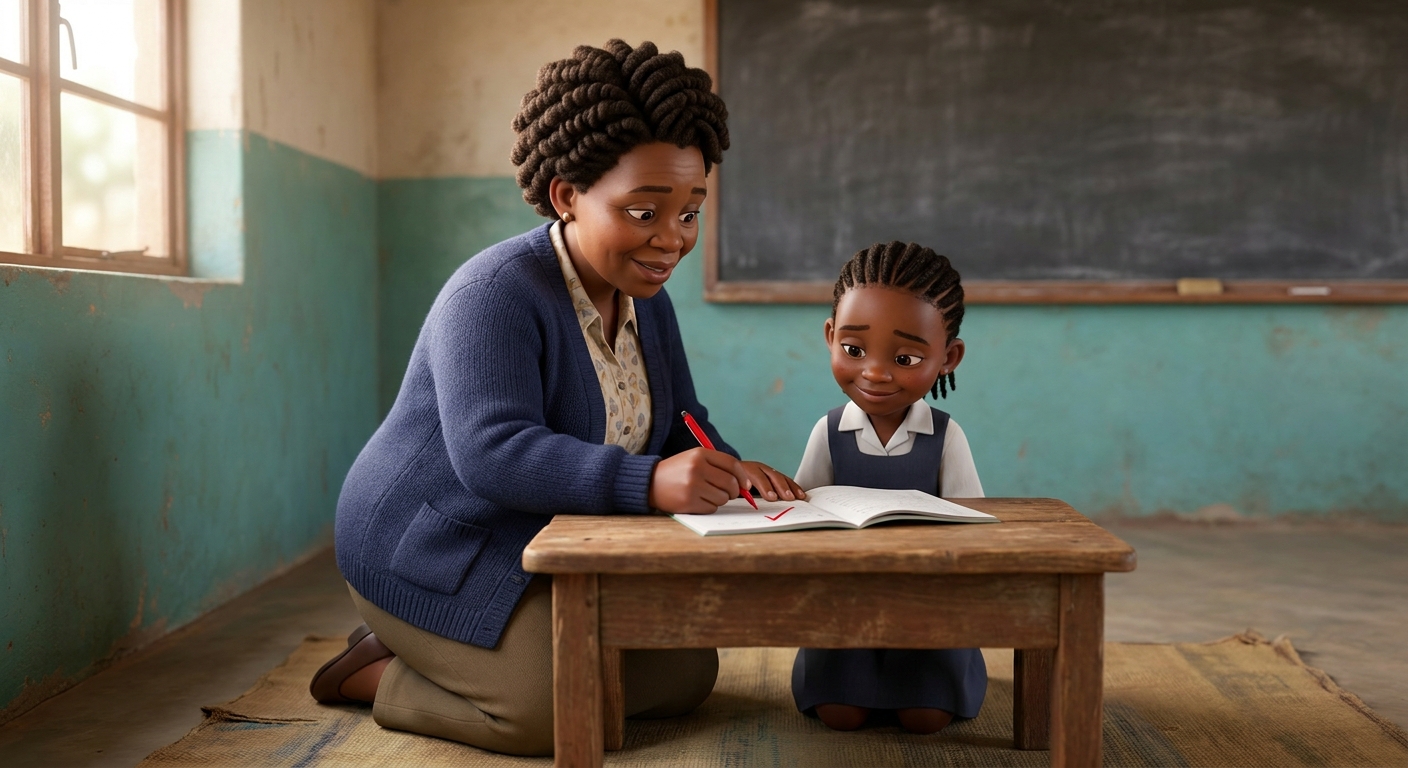
My name is Joyce Mpho Sedikwe. I have been the principal of Mapaputle Primary for eleven years, and a teacher in this district for nearly three decades. I grew up two villages from here. The first child I ever taught is now a nurse at the Kameelboom clinic, and her own daughter sits in our Grade 3 class today. That is the kind of school we are.
We believe a child learns best when she is not hungry, not afraid, and not invisible. So our day starts simply: a hot meal before lessons begin, a teacher who can name every child in her group, and an assembly where Lerato — who came in shy and stuttering last year — gets to read a Setswana poem to all sixty of us. She fumbled the first verse. We clapped harder for the second. That moment is our pedagogy in one minute.
Mapaputle is a Quintile 3 no-fee school. We do not have a science laboratory or a swimming pool. We have three full-time educators, two volunteer cooks, one borrowed Acacia tree as our reading corner, and a School Governing Body of grandmothers who turn up at every meeting. To the families who choose us: we cannot promise you the polish of a town school. We can promise you that nobody here is too small to be seen, that we will phone you when something is wrong before the term ends, and that we will walk every Grade 7 child to the gate of high school with a report card we can defend.
Thank you for trusting us with your children.
"We are not the biggest school in Bojanala. We are the school that knows where every child sleeps tonight."
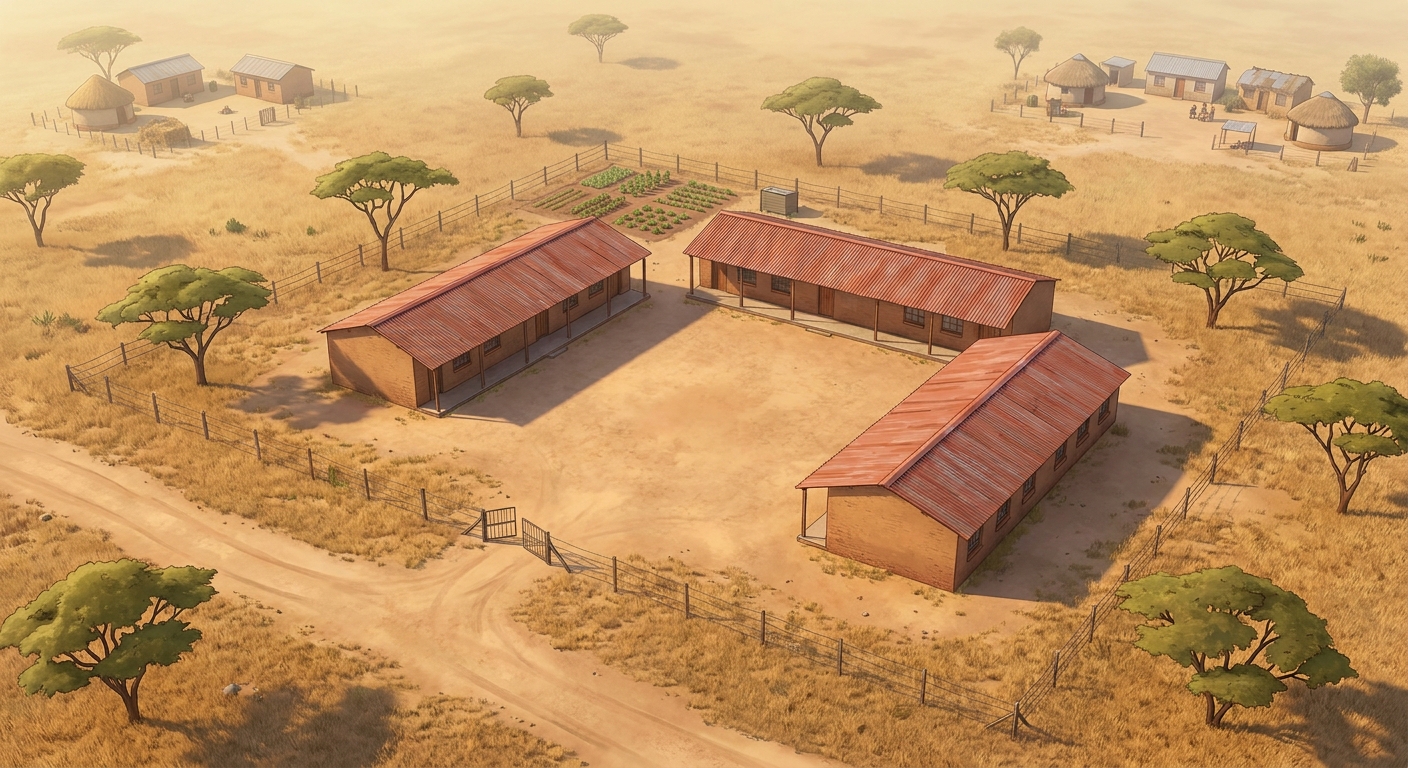
Mapaputle Primary School sits on a single dusty plot in Mapaputle village, fifteen minutes from the Kameelboom co-op shop and an hour from the nearest town. We are an ordinary public ordinary school: comprehensive phase, registered with the Department of Basic Education under NatEmis 600101083, serving the children of subsistence farmers, mineworkers, domestic workers and grandmothers who raise grandchildren on a SASSA grant. This page tells you how we got here, what we look like today, what we promise — and why so many of our families come back with the next sibling.
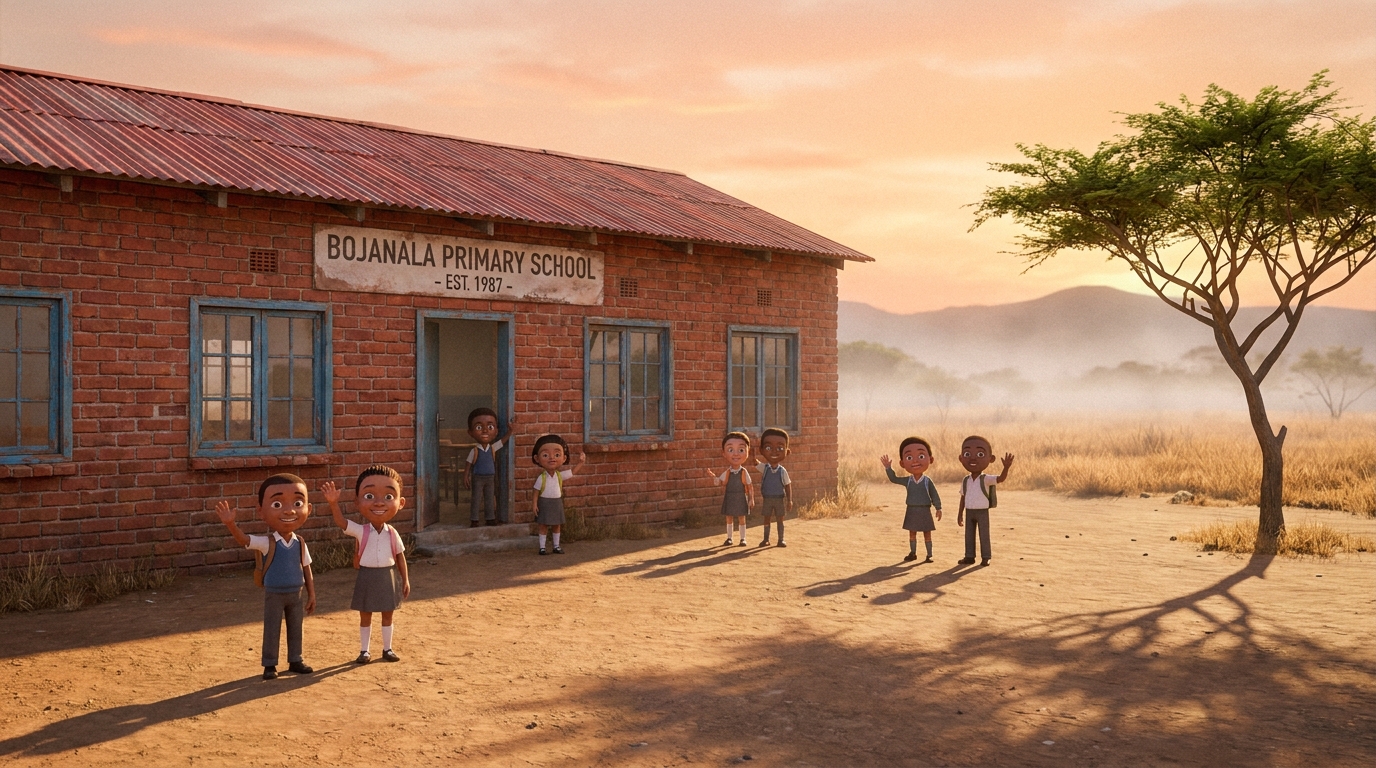
In 2024 we registered 60 learners across Grade R to Grade 7, taught by 3 full-time educators — one of whom is also our principal — with two community volunteers who run NSNP catering and after-school homework supervision. Our Phase PED is Primary School; our specialisation is Comprehensive; our quintile is Q3, which means our community has been formally classified as economically vulnerable, and we have been a No-Fee school for sixteen years.
We are a Section 21 school under the Bojanala East District. The Department pays our educators; the SGB administers a small Learner Support Material allocation that buys exercise books, chalk and the occasional second-hand reader. Of our 60 learners, every single one qualifies for the National School Nutrition Programme, and every single one is fed before 11:00 every school day. That is not a feature of our school. That is the floor.
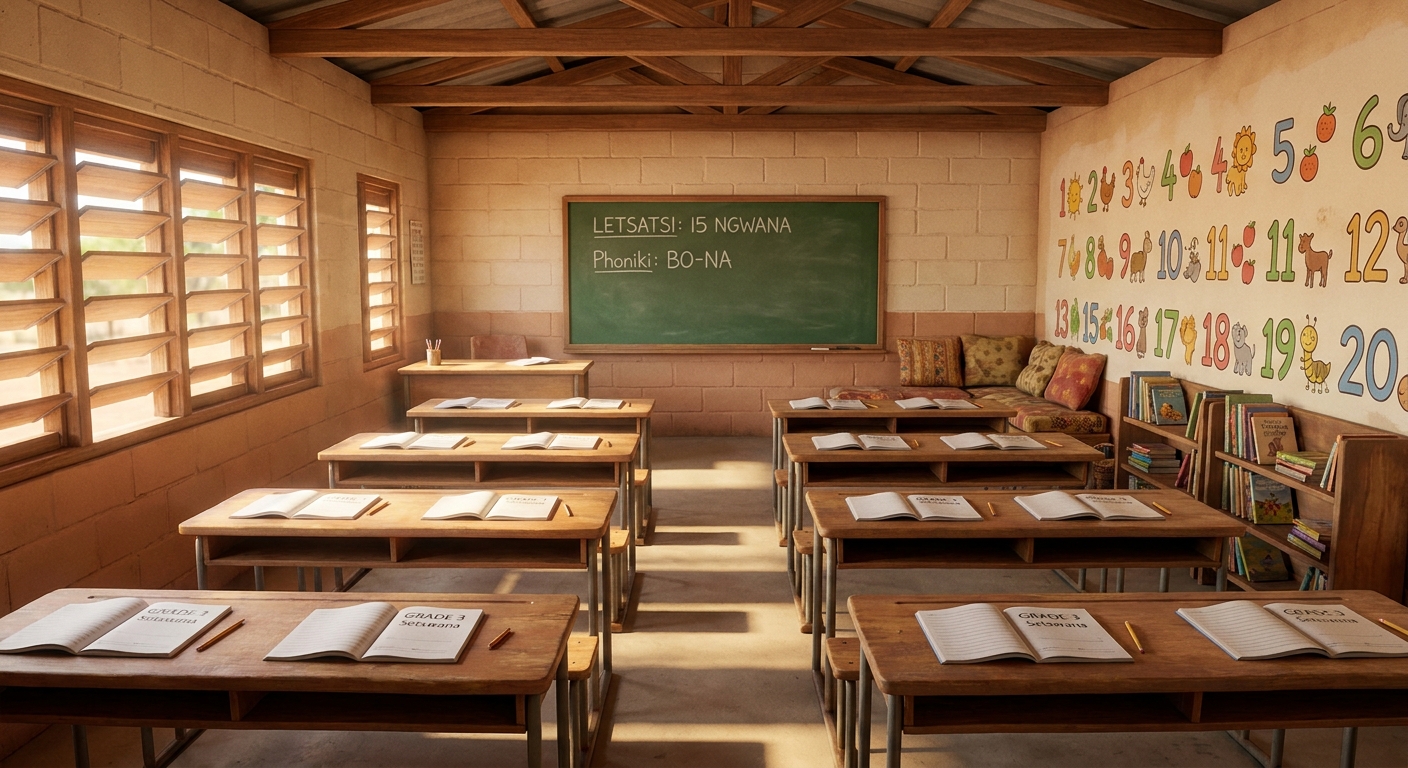
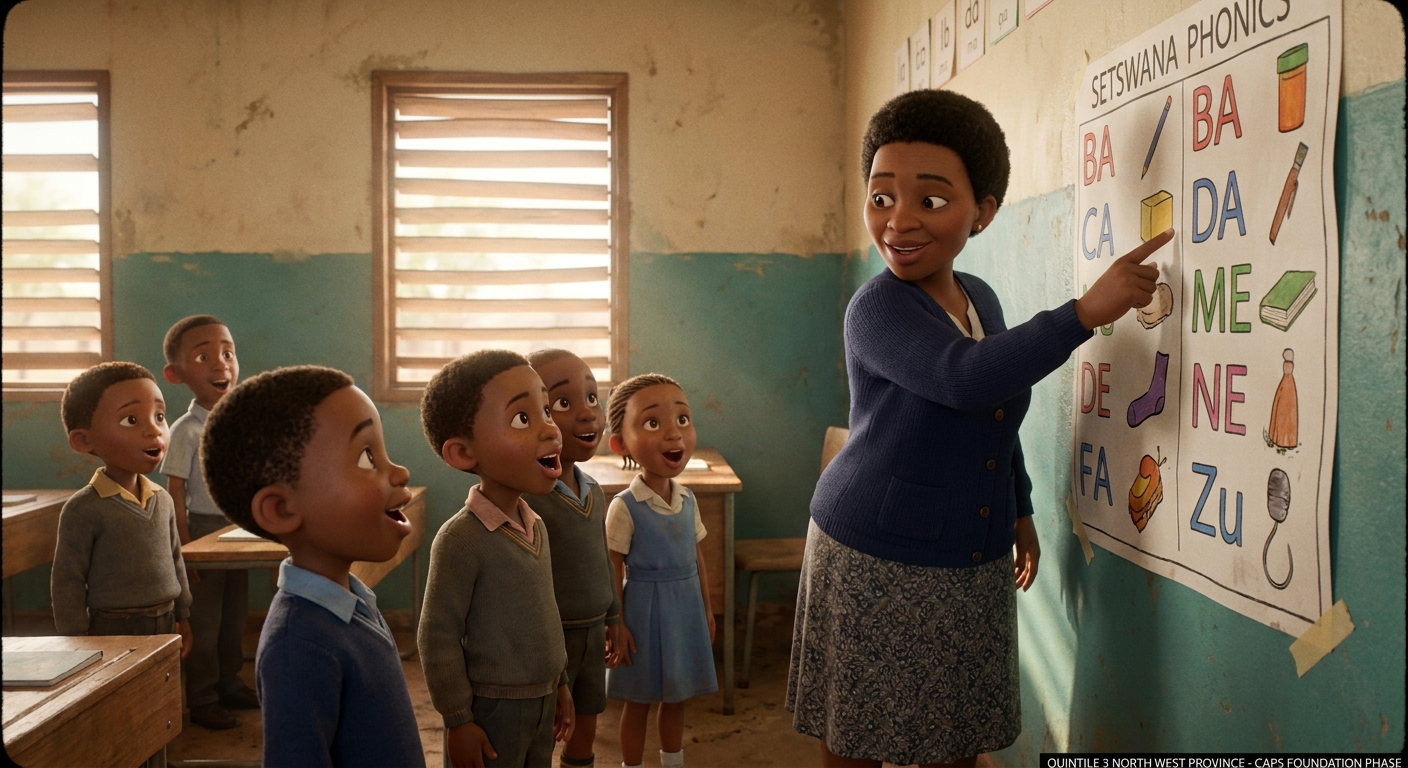
We exist to give the children of Mapaputle and Kameelboom the best public primary schooling the CAPS curriculum allows. Not a "future leader" speech. Not a glossy brochure. Just a year where the child reads better than she did in February, can do her four operations confidently, has eaten lunch every day, and trusts at least one adult on the school grounds.
We promise our families three things, in this order: that we will teach in their home language first, and English second; that we will tell them the truth about their child's progress, even when it is hard; and that no child will be turned away from this school because of school fees, uniform shortages, transport difficulty, or a quiet term at home. The rest — the gardens, the choir, the spelling bees — we add as we can.
When we ask families why they enrolled, the same three answers come up. They are quiet, unfashionable answers. We are proud of them.
A school of 60 learners means our principal can — and does — greet every child and parent at the gate by name every morning.
If a child is struggling, we call within two weeks, not at term-end. We would rather have an awkward Wednesday call than a heartbroken December report.
Every learner gets the daily NSNP meal. On Monday holidays, we send a take-home loaf with the youngest grades, no questions asked.
Our educational philosophy is simple and old-fashioned: the children of a poor village deserve a teacher who is well-rested, a classroom that is clean, a meal at lunchtime, and a chance to read aloud at least once every week. From those four things, almost everything else follows. We do not believe in heroic miracle schools. We believe in steady, kind, well-prepared Tuesday lessons — week after week, year after year — and the dignity those Tuesdays add up to.
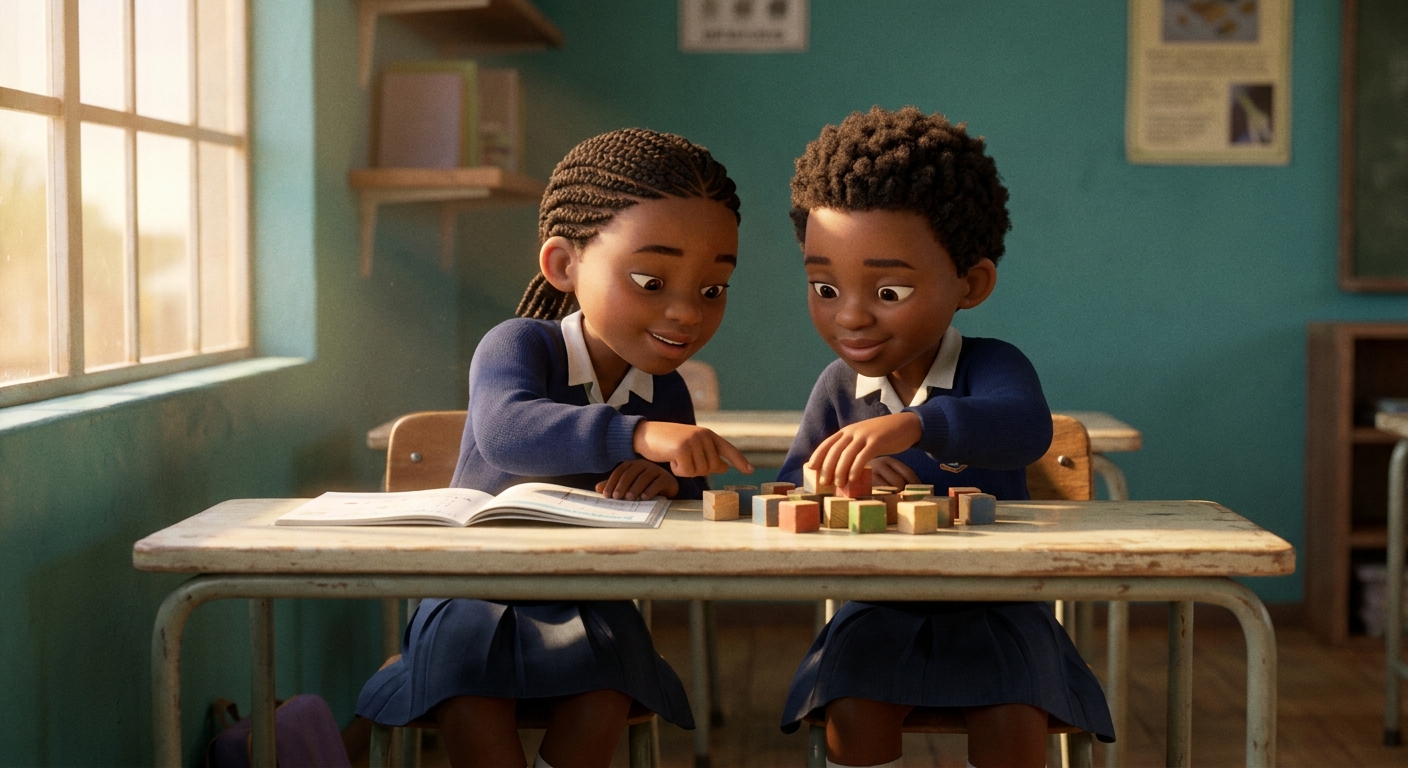
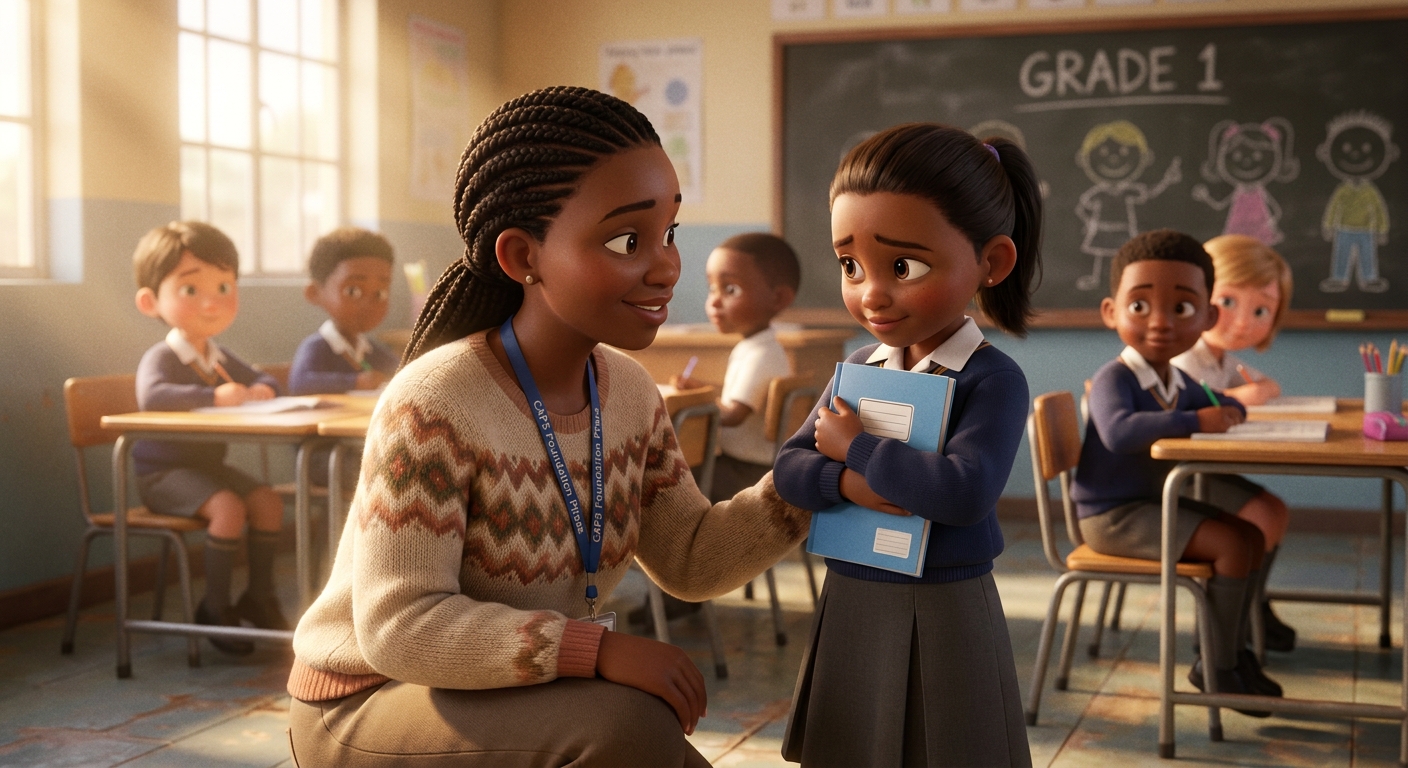
To deliver the CAPS curriculum with care and rigour to every Mapaputle child, in their home language first; to feed them every school day through NSNP; and to walk each Grade 7 to high school with a report we can defend.
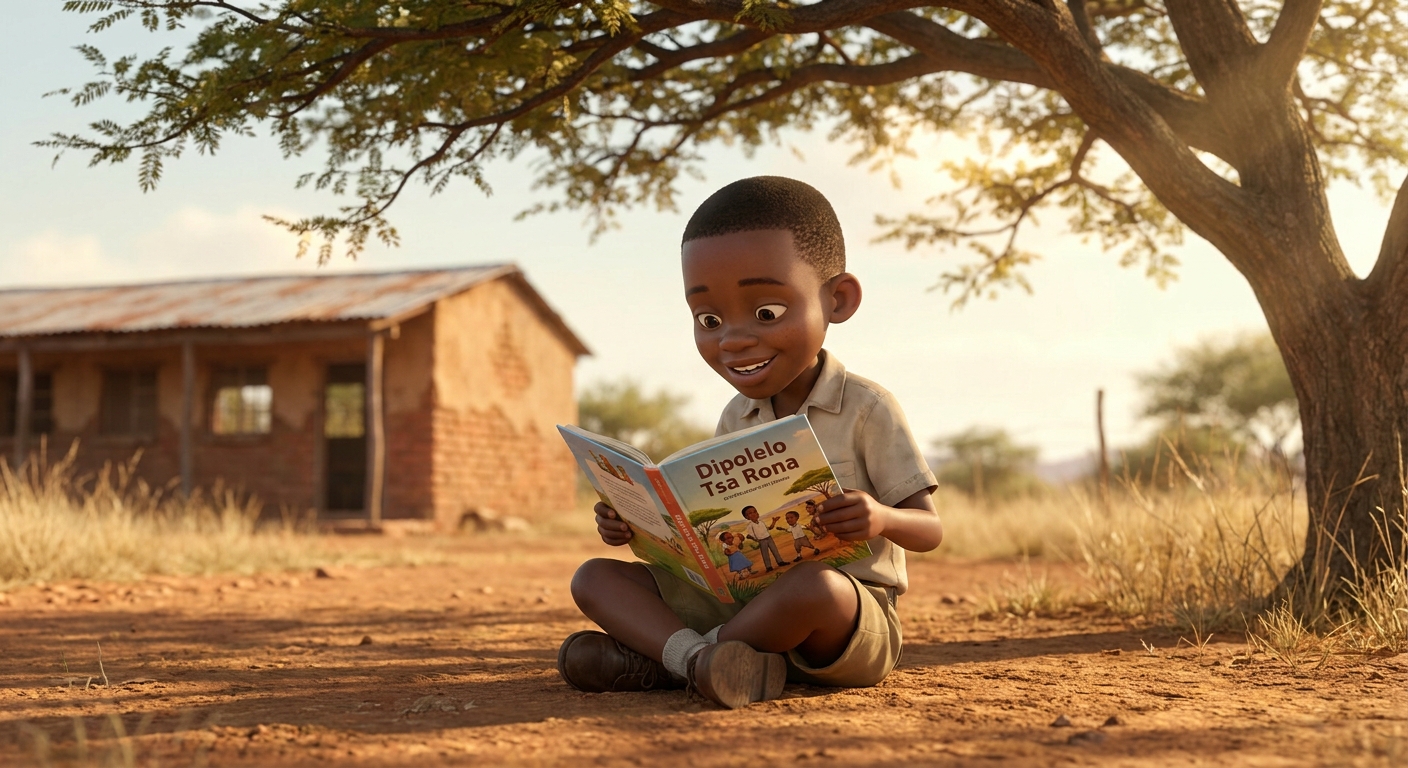

A village school where every learner is read to, eaten with, and walked home; where Setswana, English and the local farming year all live in our classrooms; and where 100 % of our Grade 7s leave numerate, literate, and curious.


Ubuntu · Curiosity · Care · Discipline · Courage · Belonging · Excellence. These seven words live on the back of every classroom door — and we revisit one of them, in life skills, every Friday afternoon.
A short, honest timeline — the milestones our school remembers, in the words of those who were there.
After two years of village SGB petitions, we open our first three classrooms with 47 learners and one borrowed roll register. Our first principal teaches Grade 1 in the morning and Grade 4 in the afternoon. The Acacia tree behind block A is planted by the SGB chair.
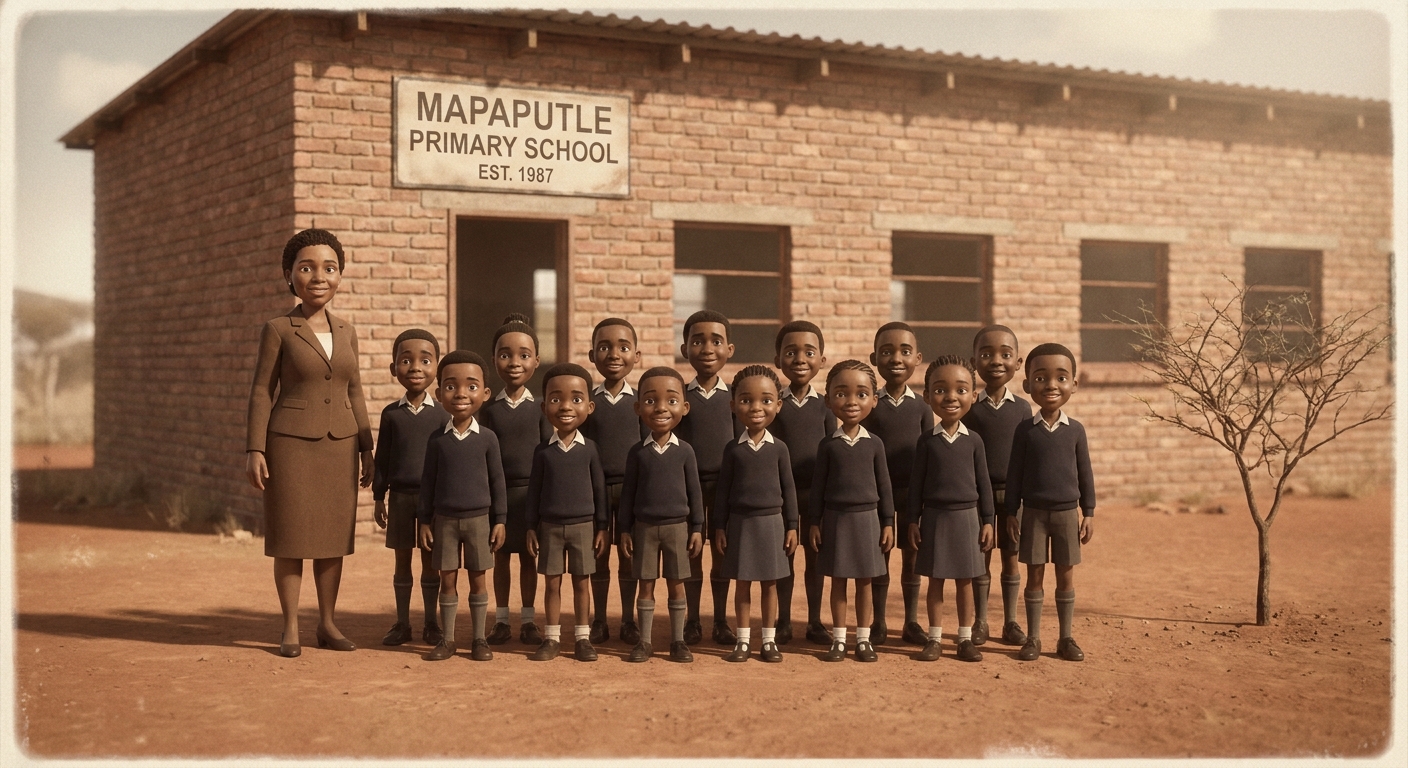
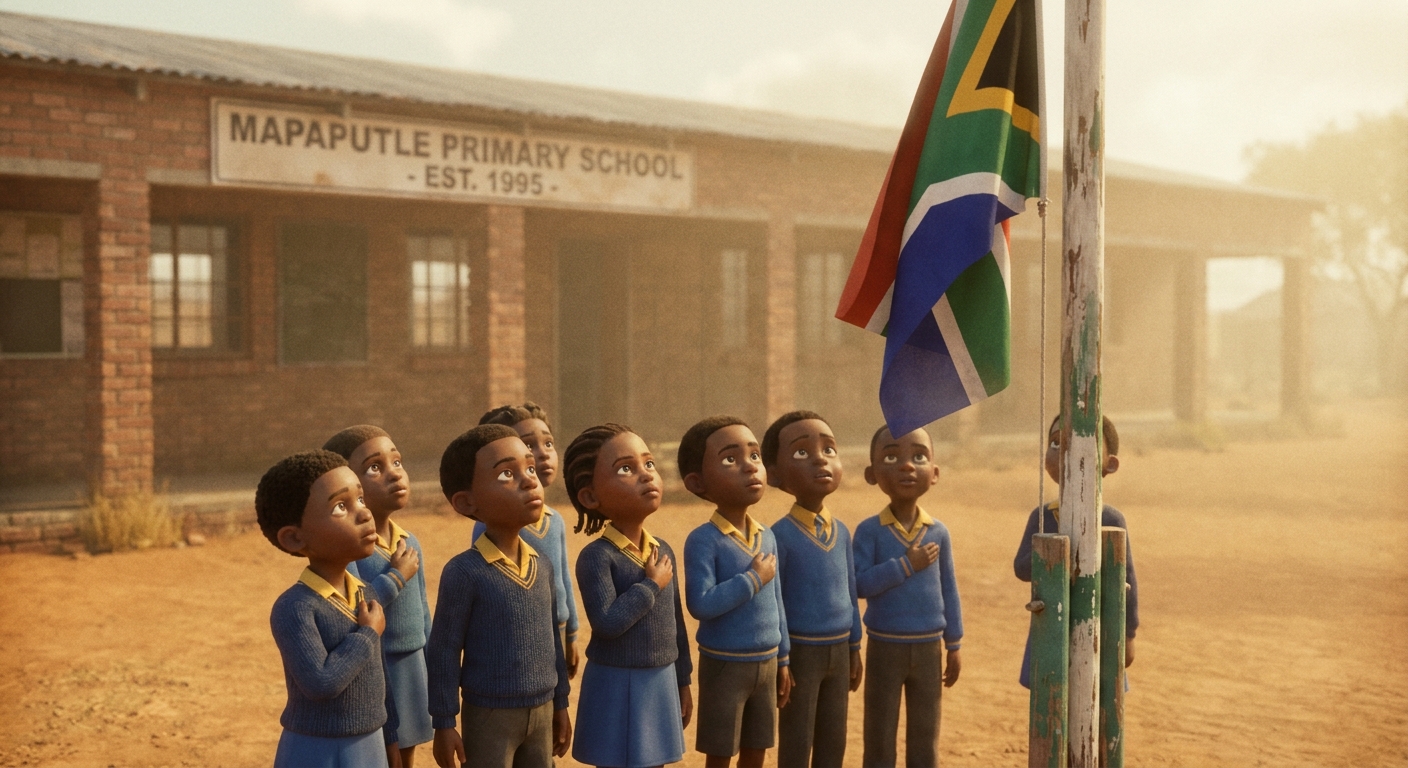
After 1994 we become a public ordinary school under the new Department of Education, with English added as a First Additional Language from Grade 4. The original SGB chair, Mr Lekgwathi, is re-elected unopposed. The leaking roof is finally repaired with a community fundraiser.
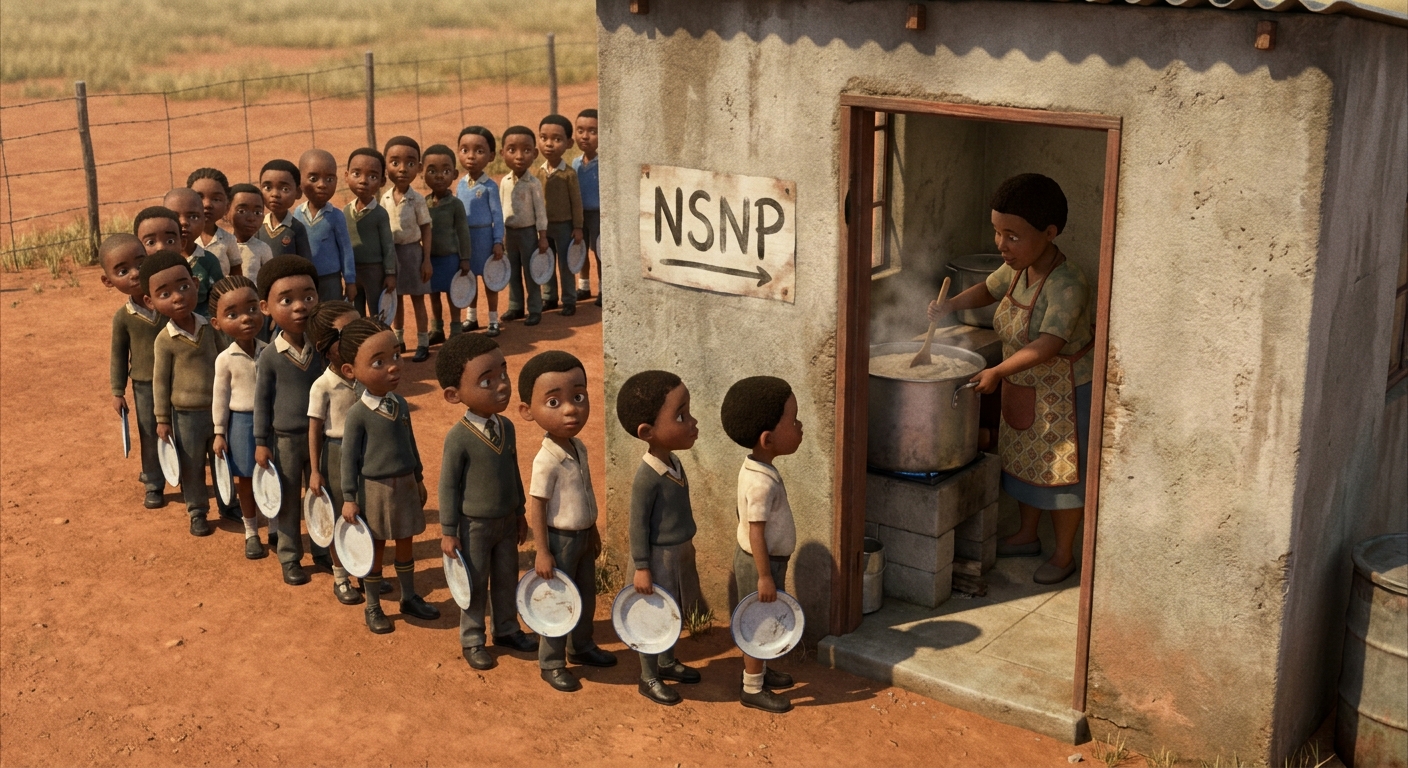
Mapaputle is gazetted as a No-Fee school under Quintile 3, formally recognising the economic profile of our community and ending school fees. The same year we register for the National School Nutrition Programme — one cooked meal a day, every school day.
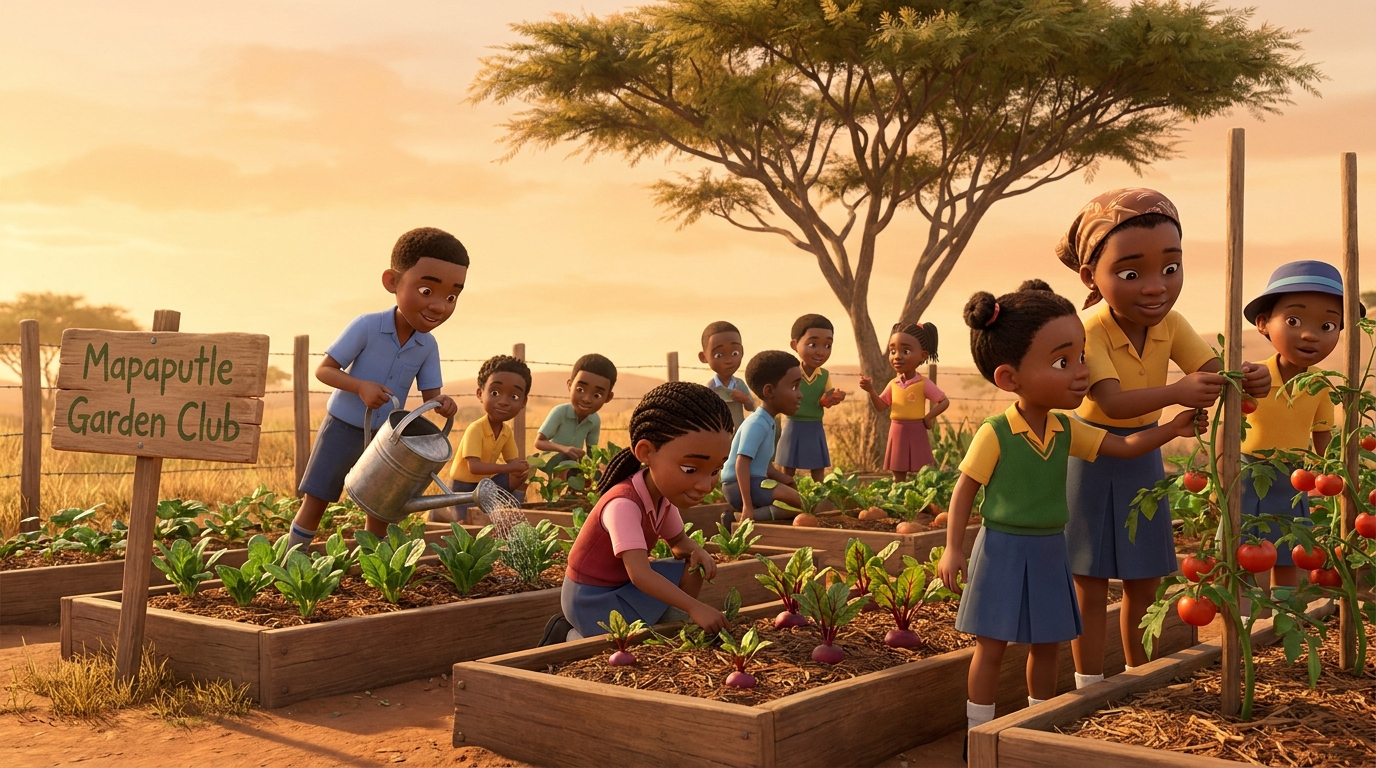
We end the year as a confirmed Section 21 school, with a 400 m² vegetable garden feeding straight into the NSNP pots, a partnership with the Kameelboom Farmers' Forum, and a Grade 7 cohort that achieved 100 % promotion to the local high school. Sixty learners. Three educators. One quietly ambitious plan for 2026.
Mapaputle is held up by the same hands that built it: parents, grandmothers, the local farmers' forum, the Methodist church and a couple of stubborn alumni who keep coming back.
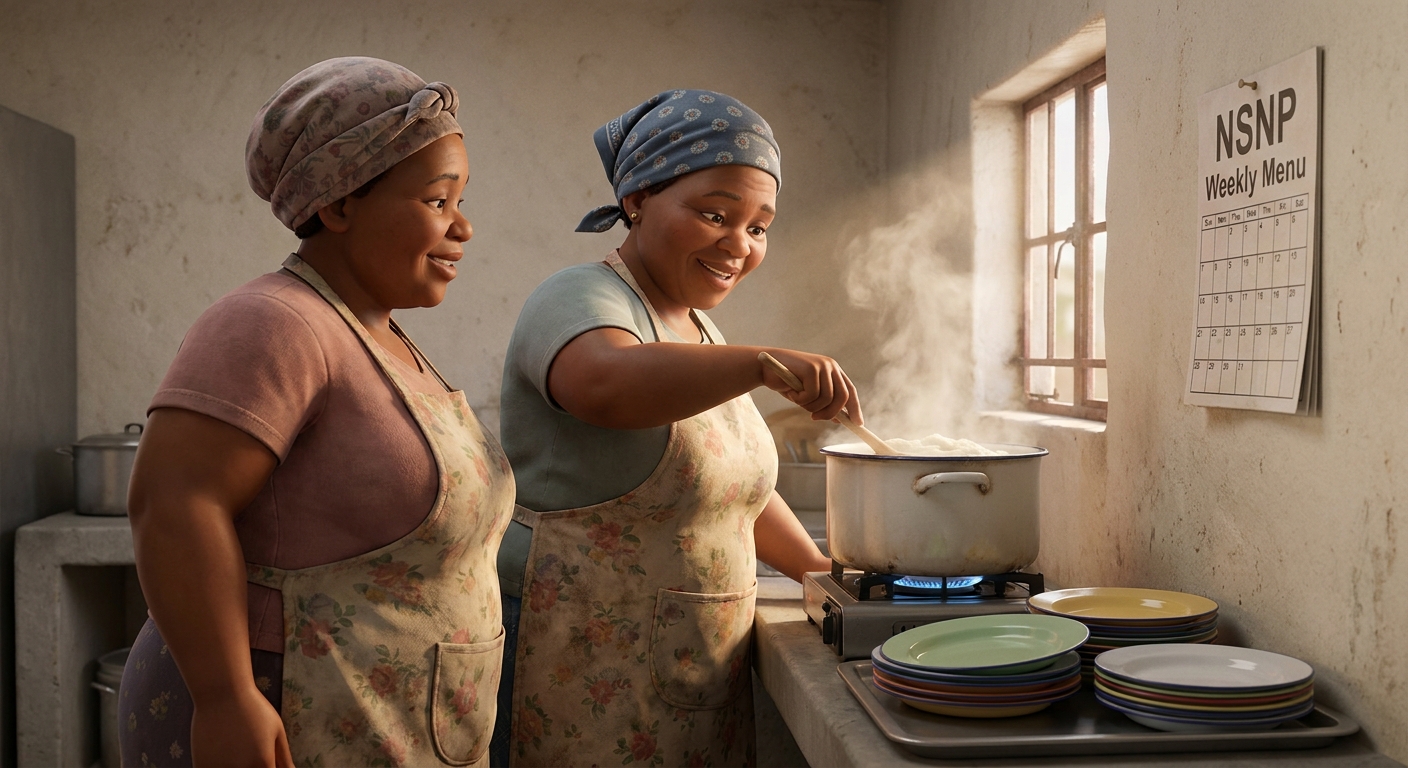
Our two volunteer cooks — Mma Salome and Mma Patience — have prepared the daily NSNP meal for nine years between them. Sixty plates of pap, samp, beans or morogo, served before 11:00. No exceptions. No queue jumping for grown-ups.
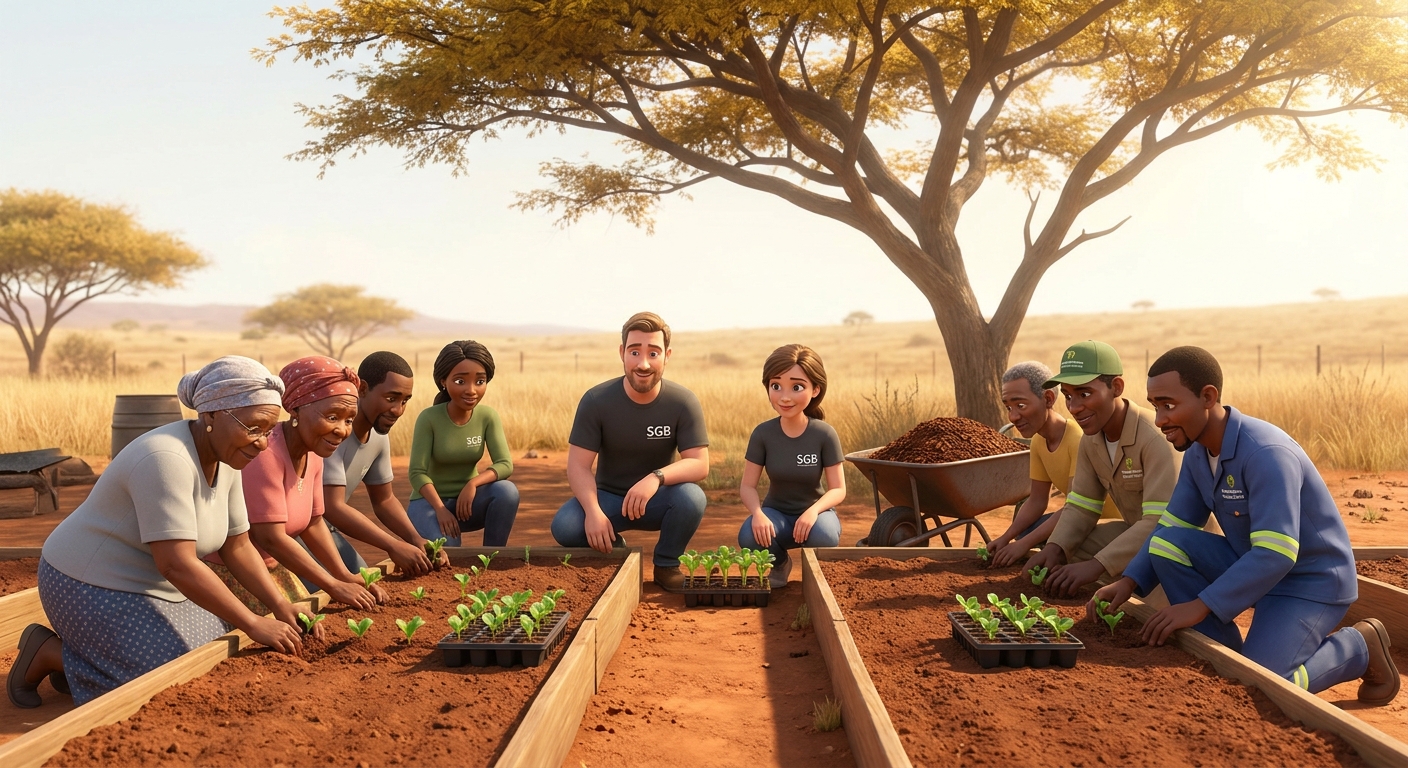
The local farmers donate seedlings every autumn. The Methodist church runs an annual book drive. Our SGB — mostly grandmothers — meets twice a term, never misses a quorum, and once stayed three hours past dark to finalise the budget.

On Saturday mornings the playground belongs to the village — soccer for the older boys, a small reading corner in the library for any child who walks in. Three of our current learners are children of former Mapaputle pupils.
It takes a village — and our village is here.